
What is boiler pump replacement and repair?
Boiler pump replacement and repair puts right the circulating pump that moves hot water from the boiler round the radiators and, on some systems, to the cylinder coil. When it fails or runs weakly, the boiler can fire and heat up while the house stays cold.
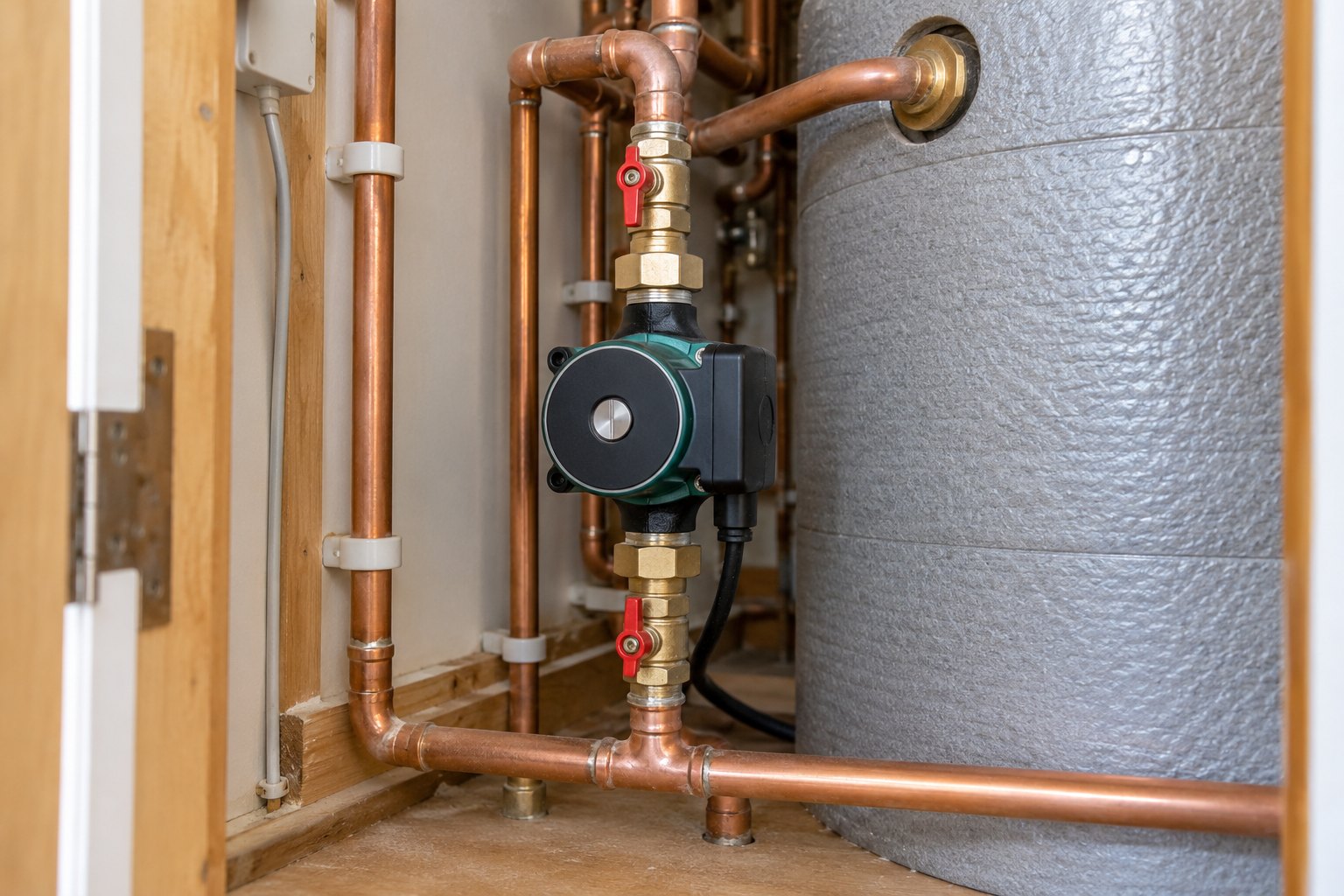
A pump may be noisy, seized, leaking or simply worn out. A Gas Safe registered engineer will check the cause, replace the head or the whole pump, and deal with the sludge or air that often shortens a pump’s life.
Signs you need boiler pump replacement and repair
- The boiler is hot but the radiators stay cold
- A loud humming, whining or rattling comes from the pump
- The boiler overheats, kettles or shuts down soon after starting
- The pump is silent or the system does not circulate
- Water weeps from the pump body or its unions
- Only the radiators nearest the boiler get warm
Pump repair and replacement options
- Pump head replacement. The motor section is swapped while the pump body stays on the pipes. It is the quickest option when the body is sound and isolation valves are fitted.
- Full pump replacement. If the body leaks or the pump is an unusual size, the whole pump comes out, which means draining the system if there are no isolation valves.
- Integrated pump in a combi. Some combis have the pump built into the hydraulic assembly. The engineer replaces the pump unit or the manufacturer’s assembly, which costs more.
- Freeing a seized pump. A pump that has stuck from lack of use can sometimes be freed and kept going, though a second failure is likely.
- Speed setting and air removal. Sometimes the pump is fine and a wrong speed setting or trapped air is the cause. Setting the speed and bleeding the pump can restore circulation.
What to include when asking for a quote
Say which part of the system is hot and which is cold. Do not touch hot pipes or adjust the pump to investigate. Describe any noise you have noticed during ordinary use and which radiators remain cold.
Tell them where the pump sits and what kind of boiler it is. A pump on exposed pipework with isolation valves either side is a short swap, while a pump hidden inside a compact combi may need the hydraulic block removed. Add whether the system has ever been flushed, because sludge is a common reason pumps fail.
Ask the quote to specify the pump make and model or head type, whether isolation valves are being fitted, and whether refilling, inhibitor and bleeding are included. If a flush or magnetic filter is suggested, ask for it priced as a separate line so you can decide.
How much does boiler pump replacement and repair cost?
| Type of job | Typical cost |
|---|---|
| Pump head replaced, isolation valves in place | £180–£250 |
| Full pump replaced, system drained and refilled | £250–£360 |
| Pump inside a combi hydraulic block; flushing priced separately | £360–£450+ |
These are indicative UK budgeting figures, not fixed quotes. Confirm parts, labour, VAT and any call-out charge with the business before booking.
A system choked with sludge can wear out a new pump quickly, so a magnetic filter or a powerflush is sometimes recommended alongside it. That is a separate price, so ask for it itemised.
The process: what to expect
- Diagnose. The engineer checks power to the pump, listens for noise, feels the pipework for heat and checks the speed setting.
- Isolate. The pump valves are closed, or the system is drained if none exist.
- Swap the pump. The pump head or whole pump is replaced, with new seals and gaskets.
- Refill and vent. The circuit is filled, inhibitor is added where needed, and air is bled from the pump and radiators.
- Balance and test. The speed is set, the radiators are checked for even heat and the boiler is run to confirm it no longer overheats.
Planning permission and building regulations
Use an engineer on the Gas Safe Register with the right appliance and fuel categories for gas work. Ask to see the attending engineer’s photo ID and check their qualifications. Do not remove the boiler casing yourself. An external pump or room control may need a competent heating or electrical specialist without involving gas work; the qualifications needed depend on what is being disturbed.
A straightforward like-for-like component repair is not normally notifiable under Building Regulations. If the job expands to a replacement boiler, changed flue or new electrical circuit, ask what approvals and certificates are required in your part of the UK.
How to choose an engineer for boiler pump replacement and repair
- Is the engineer Gas Safe registered, with domestic boilers on their card?
- Will they find out why the pump failed, not only fit a new one?
- Are isolation valves included, so the next pump change is quicker?
- Do they recommend and price a magnetic filter or flush separately?
- How long are the pump and the labour guaranteed?
Frequently asked questions
How long does a boiler pump last?
Often 10 to 15 years, though sludge, air and a hard-working system can shorten that. Noise and cold radiators are the usual warning signs.
Why is my boiler hot but my radiators cold?
A failed or stuck pump is one common cause. Others include a closed valve, trapped air, a blocked system or a faulty zone valve, so an engineer needs to check.
Is a noisy boiler pump dangerous?
Noise alone cannot establish whether the boiler is safe. Air, wear or an unsuitable speed setting can cause it. If there is overheating, switch the boiler off using its normal controls and call an engineer.
Can I replace the pump head myself?
Use a competent professional: pump replacement involves electrical isolation and hot water. Work affecting the gas appliance requires the relevant Gas Safe competence; an external heating pump may be dealt with by a suitably qualified heating or electrical specialist.