
What is boiler ignition and pilot light repair?
Boiler ignition and pilot light repair gets a gas boiler lighting reliably again. Modern boilers light the burner with a spark and prove the flame with a probe, while older boilers keep a small pilot burning all the time, and a fault in either method leaves the boiler locked out and the house cold.
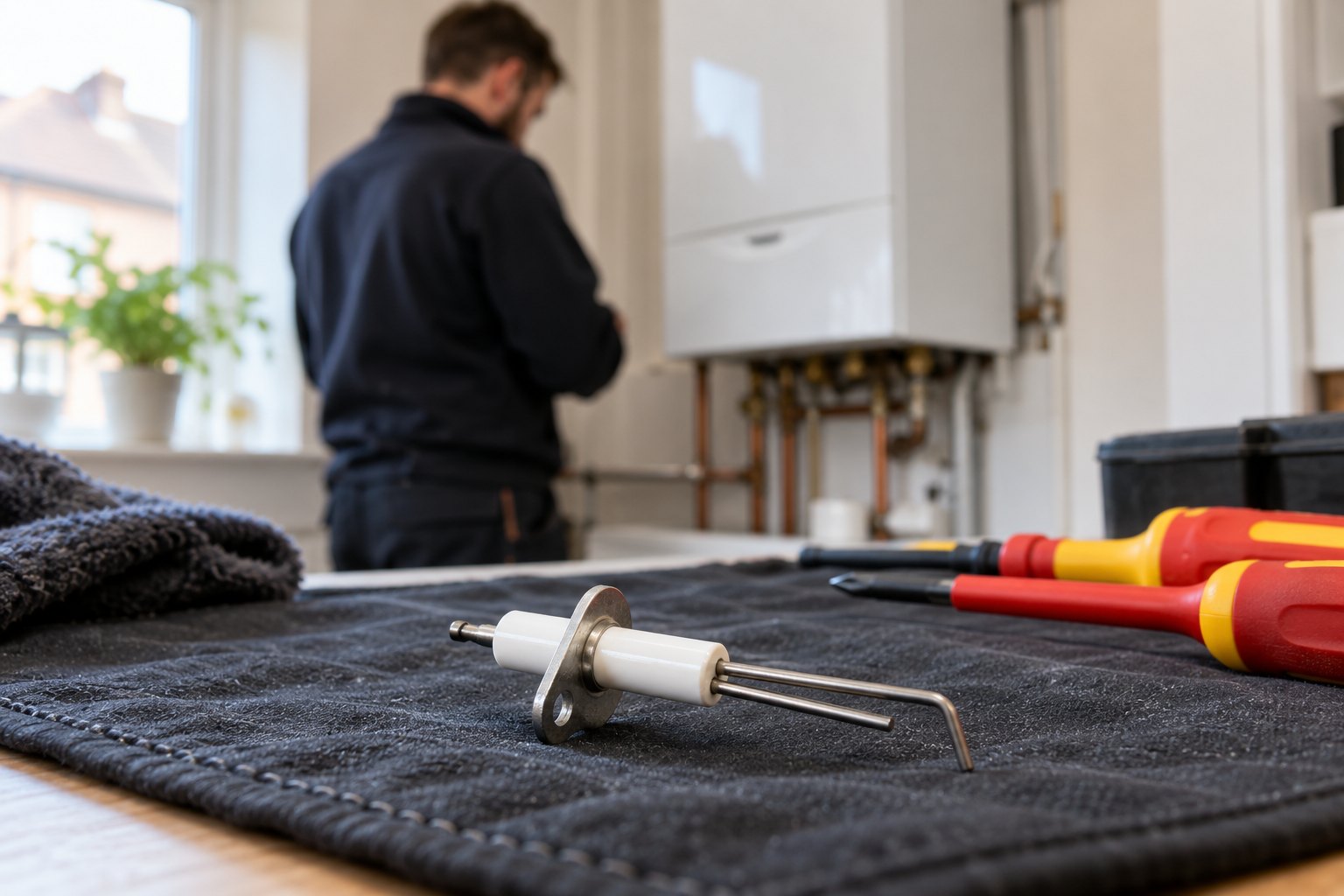
Because the ignition sequence involves gas, a fault should be diagnosed by a Gas Safe registered engineer who tests each stage rather than guessing. Many ignition faults turn out to be a small part or a clean-up, so a quick call-out is often enough.
Signs you need boiler ignition and pilot light repair
- The boiler clicks several times but no flame appears
- The burner lights, then goes out within a few seconds and the boiler locks out
- The display shows an ignition fault code, or a reset light comes on after every attempt
- A standing pilot light keeps going out or burns yellow and weak
- You hear the fan start but nothing follows
- Other gas appliances work, but only the boiler fails to light
Ignition faults explained
- Electrode and flame probe wear. Spark electrodes erode and the gap changes, and the flame sensing probe coats with deposits so it no longer detects a flame. Cleaning and re-gapping can cure it, or the part is replaced.
- Ignition board or spark generator faults. Some boilers have a separate ignition module that produces the spark. If the electrode and leads are good but there is no spark, the module is the next suspect.
- Gas valve problems. A sticking or failing gas valve can stop gas reaching the burner even when the spark is fine. It is a dearer part, and the engineer should prove it is the cause before replacing it.
- Blocked condensate trap or flue. Many condensing boilers will not light, or shut down soon after, when the condensate pipe is blocked or frozen or the flue is obstructed. Clearing it can be the whole repair.
- Thermocouple and pilot faults. On older standing-pilot boilers, a worn thermocouple stops the gas valve staying open, and a blocked pilot jet gives a weak or yellow flame.
What to include when asking for a quote
Describe what you hear and see at the moment the heating comes on: clicks, a brief flame, a fan, or silence. An engineer can often narrow the cause from that alone, and it tells them whether to bring electrodes and probes or an ignition module.
Mention the boiler make, age and any fault code, and say whether it is a condensing boiler with a plastic pipe running outside. Frozen condensate can cause a lockout, so mention recent freezing weather; it does not rule out other faults.
Ask what the call-out covers. The written quote should say whether a combustion analyser reading and a gas tightness check are included after the repair, which part is expected to be replaced, and what happens if the gas valve has to be ordered.
How much does boiler ignition and pilot light repair cost?
| Type of job | Typical cost |
|---|---|
| Electrode and probe cleaned and re-gapped, condensate trap cleared | £120–£170 |
| New electrode, flame probe or thermocouple fitted | £170–£260 |
| Ignition board or gas valve replaced | £260–£400+ |
These are indicative UK budgeting figures, not fixed quotes. Confirm parts, labour, VAT and any call-out charge with the business before booking.
A gas valve on some makes is expensive, and on a boiler near the end of its life it may not be worth fitting. Ask the engineer for the repair price and their honest view of the boiler’s age and condition in writing.
The process: what to expect
- Check the sequence. The engineer watches the boiler try to light, notes the fault code and checks for power, gas and a clear flue.
- Inspect the ignition parts. With the casing off, they check the electrode, probe, leads, gap and the condensate trap.
- Test the gas side. The inlet pressure and the gas valve are tested if the spark and flame sensing are sound.
- Fit the part. The faulty part is replaced and the boiler is sealed and relit.
- Safety checks. The engineer runs the boiler through several cycles, takes a flue gas reading and checks for gas tightness before leaving.
Planning permission and building regulations
Use an engineer on the Gas Safe Register with the right appliance and fuel categories for gas work. Ask to see the attending engineer’s photo ID and check their qualifications. Do not remove the boiler casing yourself. An external pump or room control may need a competent heating or electrical specialist without involving gas work; the qualifications needed depend on what is being disturbed.
A straightforward like-for-like component repair is not normally notifiable under Building Regulations. If the job expands to a replacement boiler, changed flue or new electrical circuit, ask what approvals and certificates are required in your part of the UK.
How to choose an engineer for boiler ignition and pilot light repair
- Is the engineer Gas Safe registered for the fuel type of your boiler?
- Do they carry a flue gas analyser and use it after the repair?
- Do they stock electrodes and thermocouples for your make, or will they have to order?
- Will they explain which part failed, and show it to you?
- What is the guarantee on the part and on the labour?
Frequently asked questions
Why does my boiler keep locking out?
A boiler locks out when it tries to light but does not prove a flame, or detects an unsafe condition. Common reasons are a worn electrode or probe, a blocked condensate pipe, low gas pressure or a failing gas valve. Repeated resets are not a fix.
Is it safe to keep resetting the boiler?
Only reset the boiler as the manufacturer’s user instructions allow. If it locks out again, stop and contact a Gas Safe registered engineer; a lockout can indicate an ignition fault or another unsafe condition.
How do I relight a pilot light?
Follow the instructions in the boiler’s manual, which on older models usually involve a control knob and an igniter button. If it will not stay lit, or you cannot find the instructions, call an engineer.
Can ignition problems be a gas supply issue?
Yes. A fault at the meter, the supply pipe or the regulator can affect other appliances such as the hob too. If the hob also struggles, tell the engineer and contact your gas supplier.